Hushroom
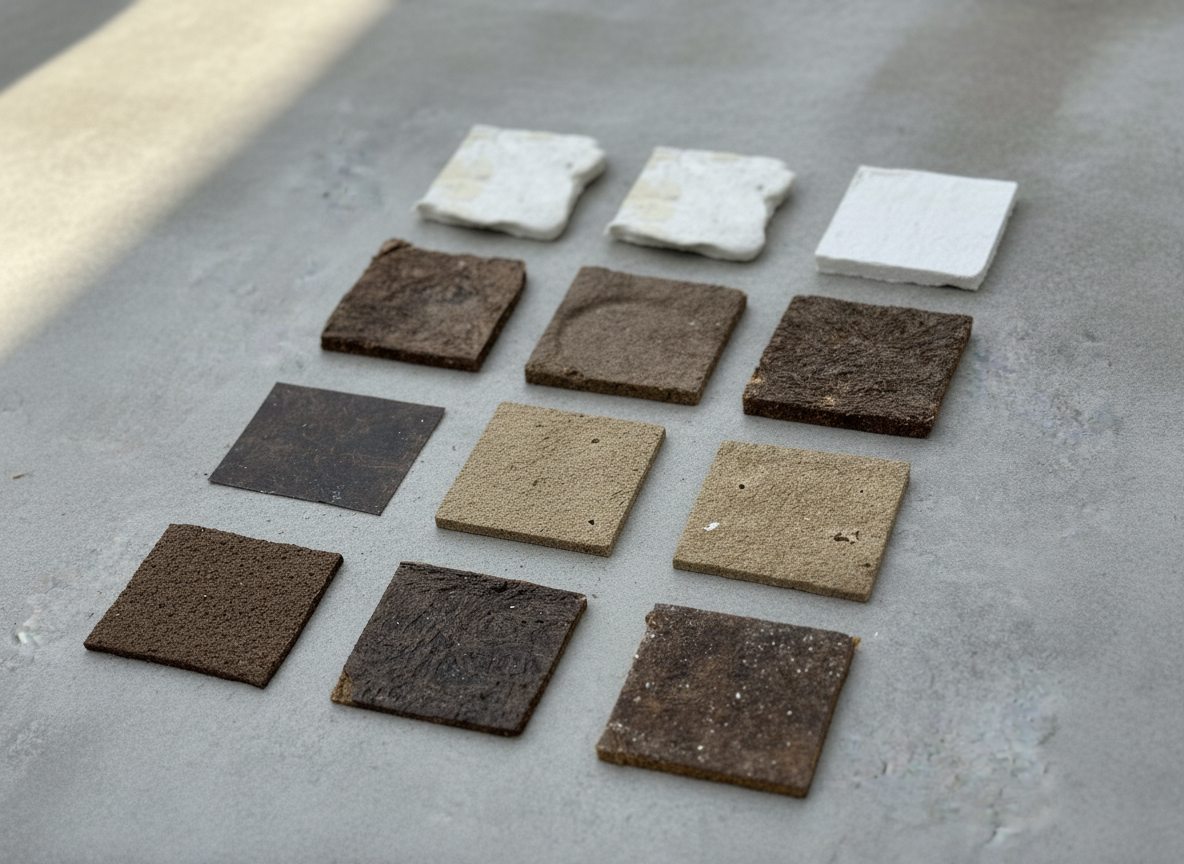
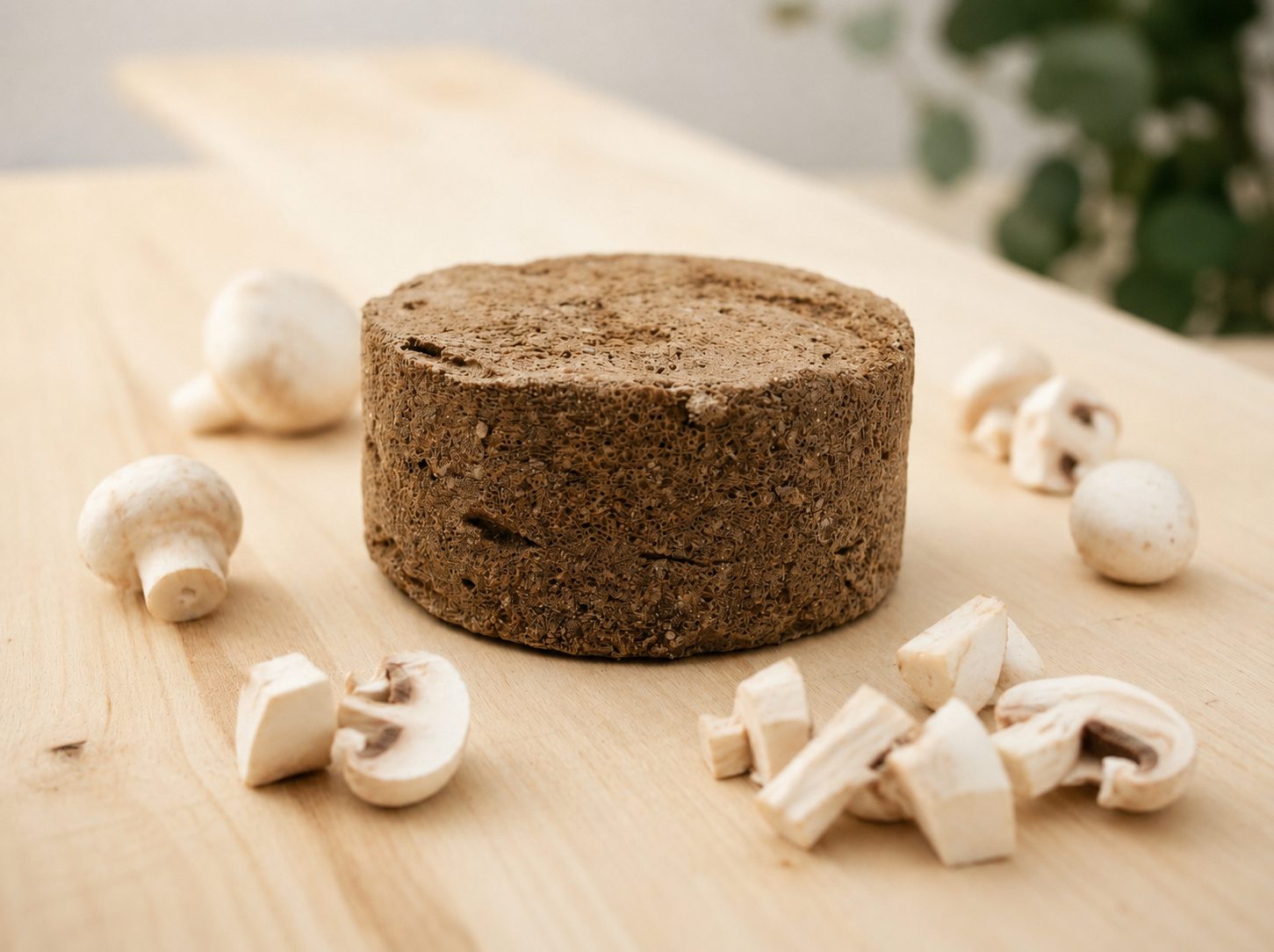
Hushroom is an explorative material research project investigating bio-composite alternatives to synthetic acoustic insulation. Driven by the environmental impact of plastic foams, this ongoing study explores how mushroom fruiting bodies can be engineered into highly porous, biodegradable acoustic materials. The focus lies entirely on understanding fundamental material behaviors and processing techniques rather than developing a finalized commercial product.
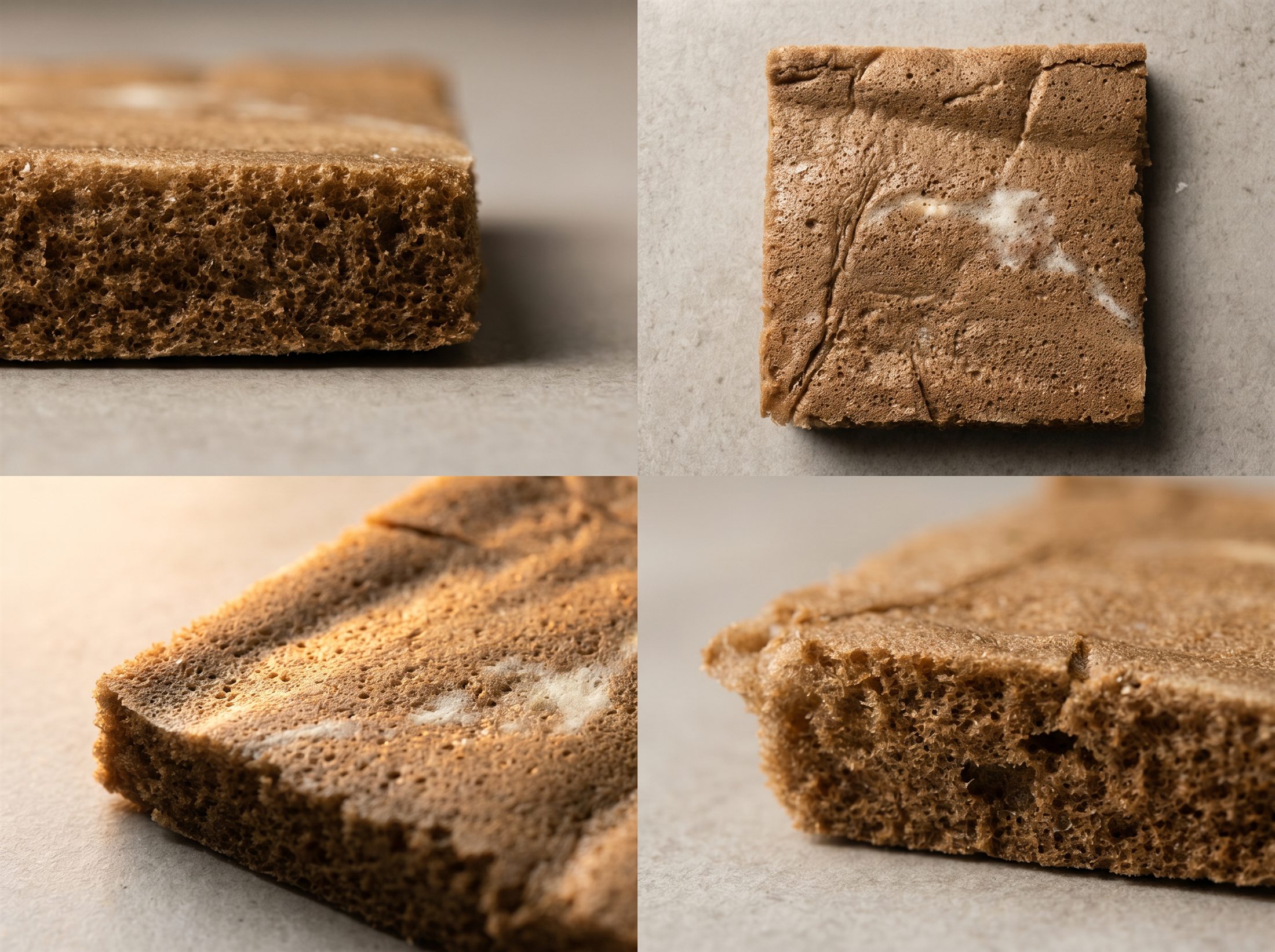
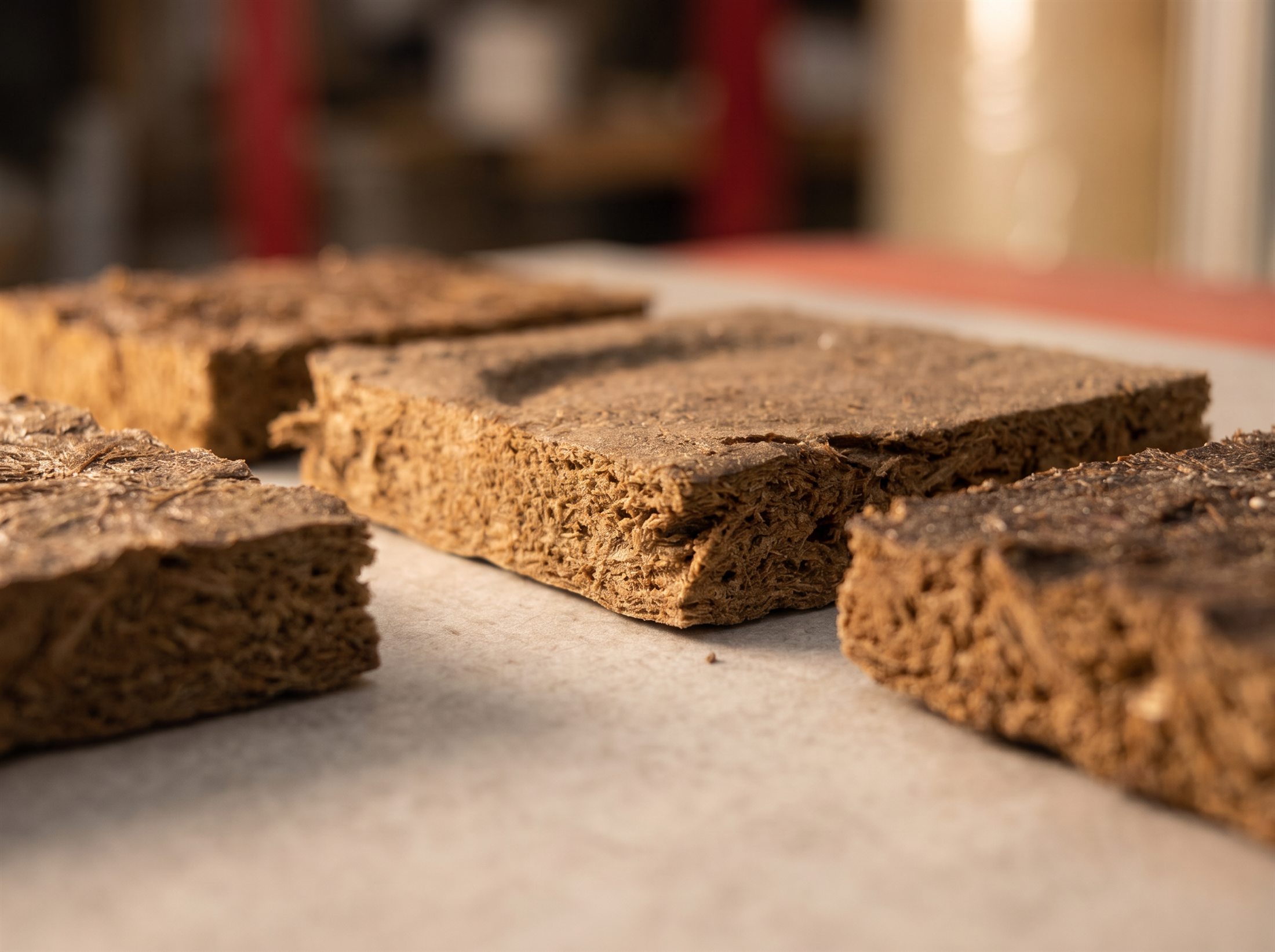
The research methodology centered on testing natural foaming agents like aquafaba and gelatin to achieve an optimal cellular structure. Through iterative physical experimentation, mechanical whipping yielded smaller, more stable bubbles compared to standard aeration methods, creating a robust internal architecture. To control the material morphology during the freeze-drying process, stabilizing additives were crucial. Xanthan gum provided the necessary elasticity to prevent structural collapse, while sodium alginate ensured dimensional stability.
To quantify these physical properties, the experimental samples were evaluated using an impedance tube setup. Acoustic testing demonstrated that both the aquafaba and gelatin composites possess sound absorption coefficients that are highly competitive with standard polyurethane foam at higher frequencies. Ultimately, this project highlights a hands-on approach to experimental material development and validates the potential of engineered bio-composites in functional material science.
Type: Material Research, TU Delft
Year: 2024