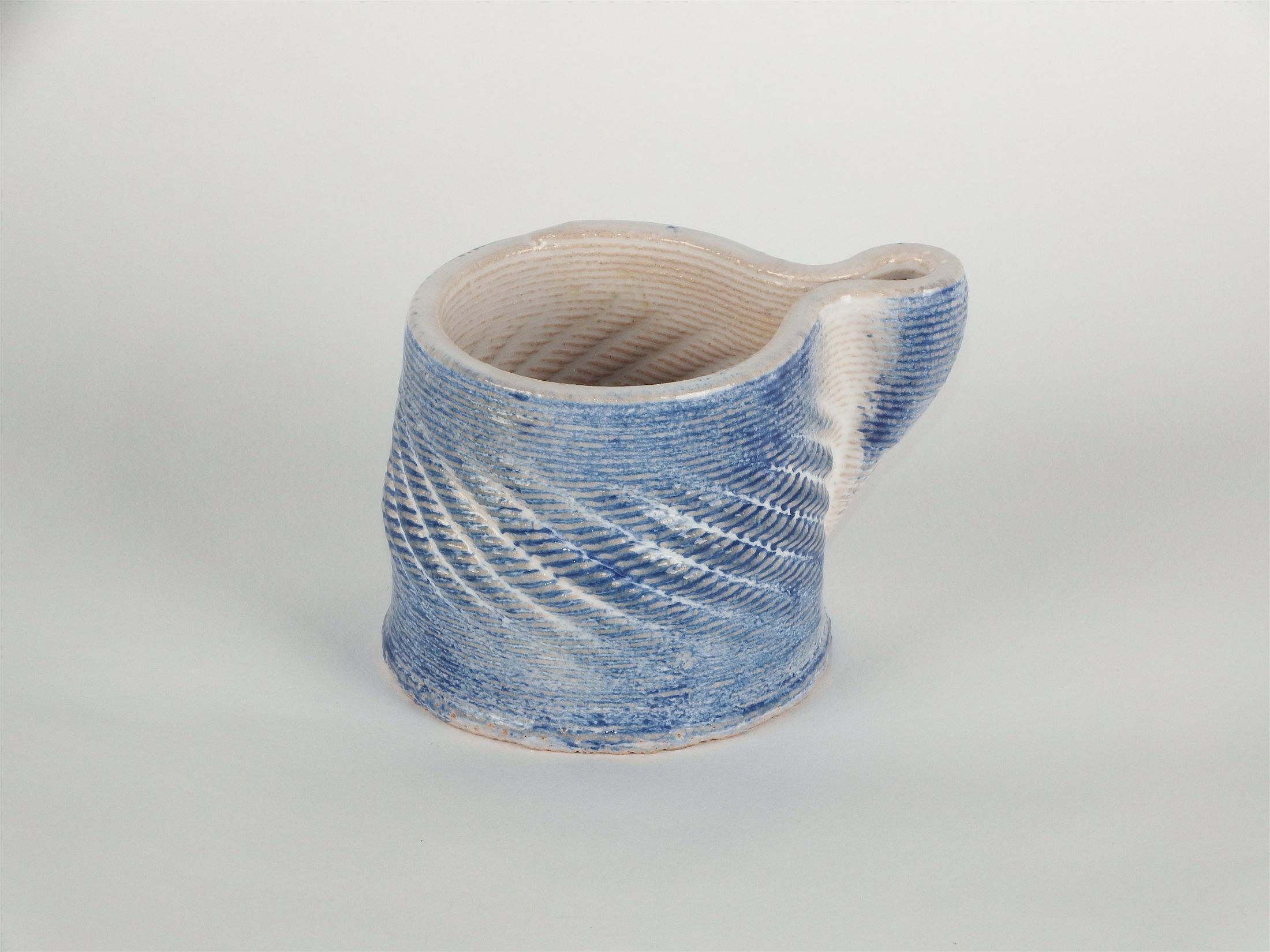
01Coffee Mug
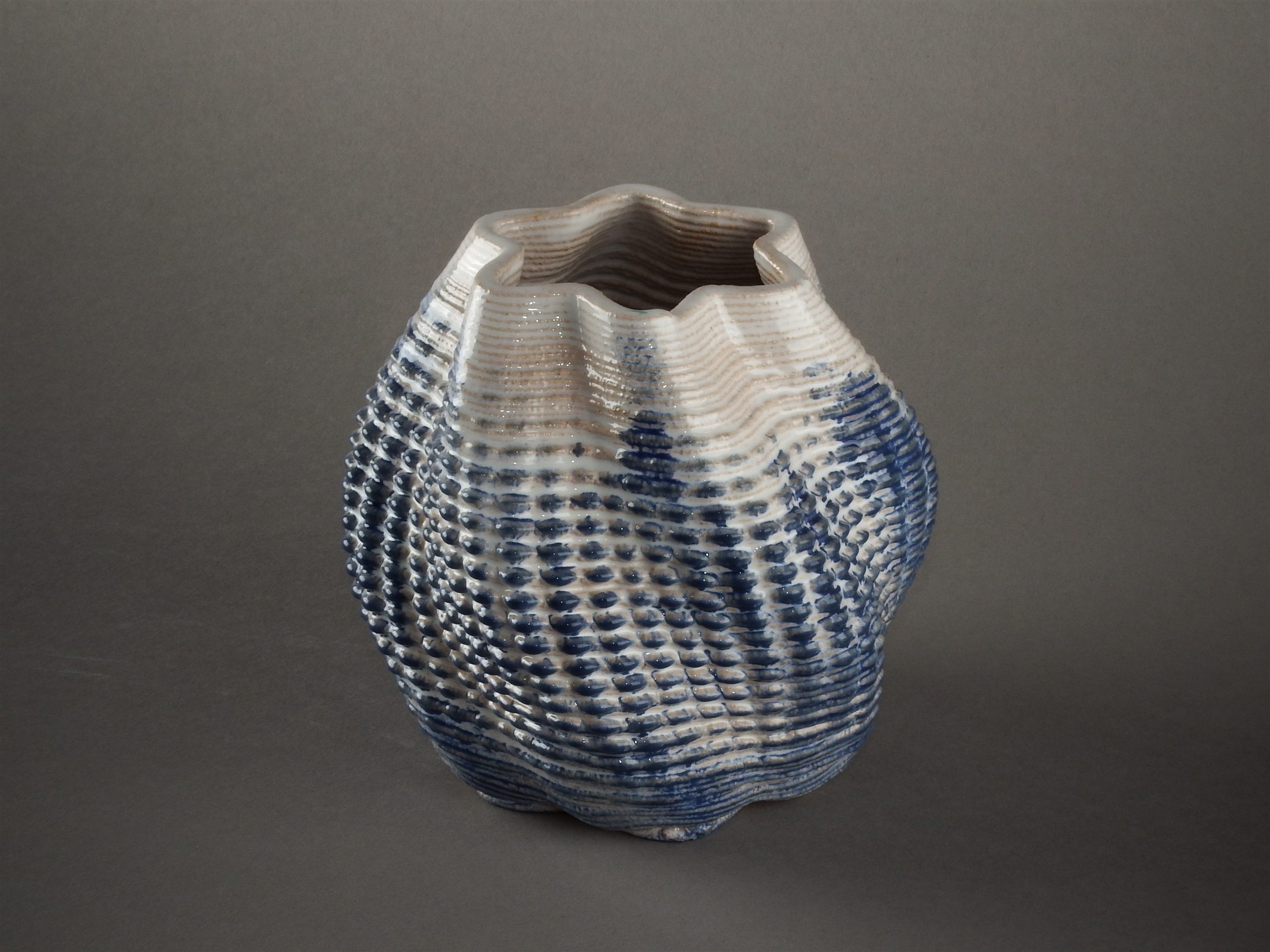
02Star Vase
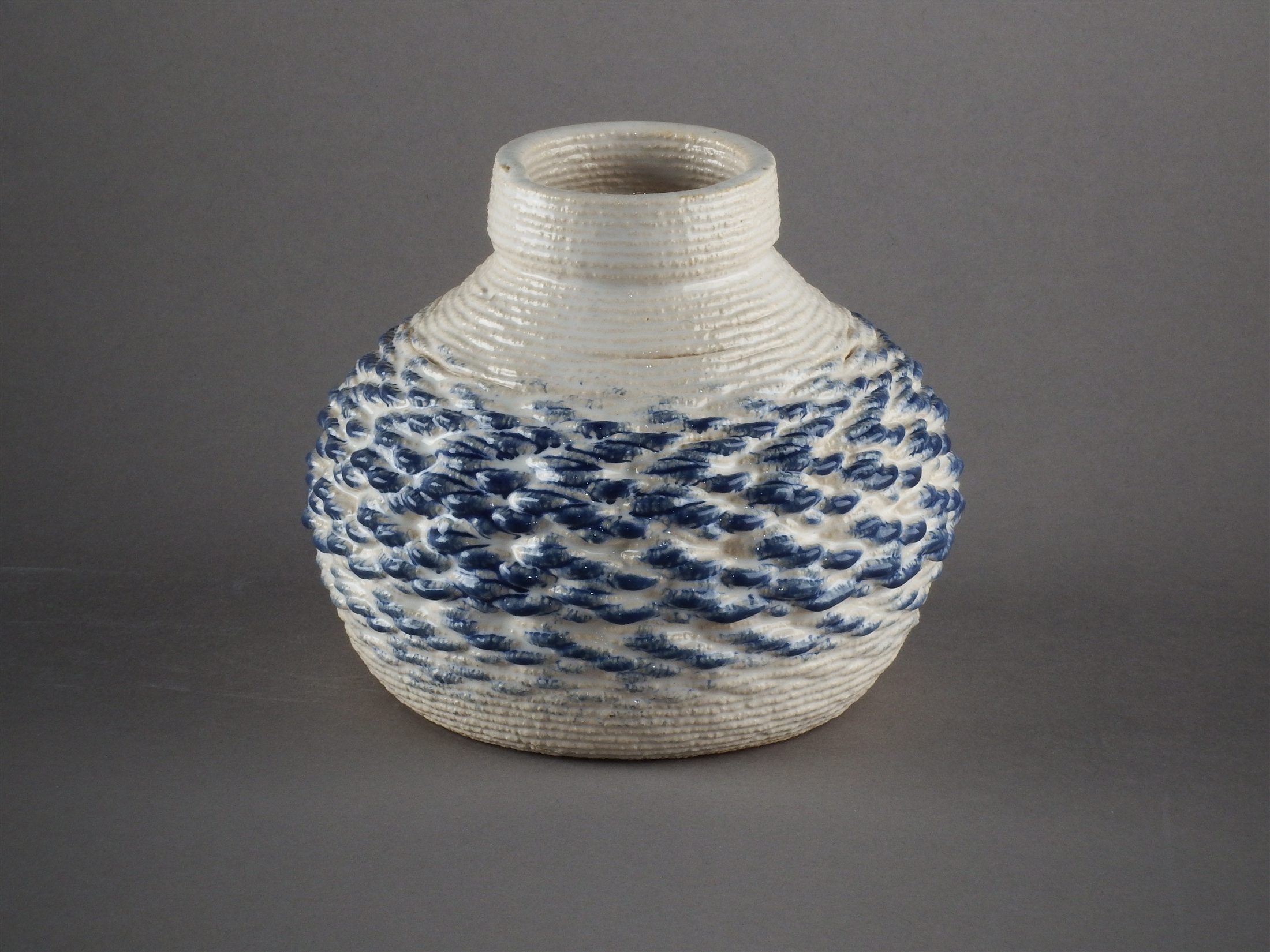
03Vase Bulb
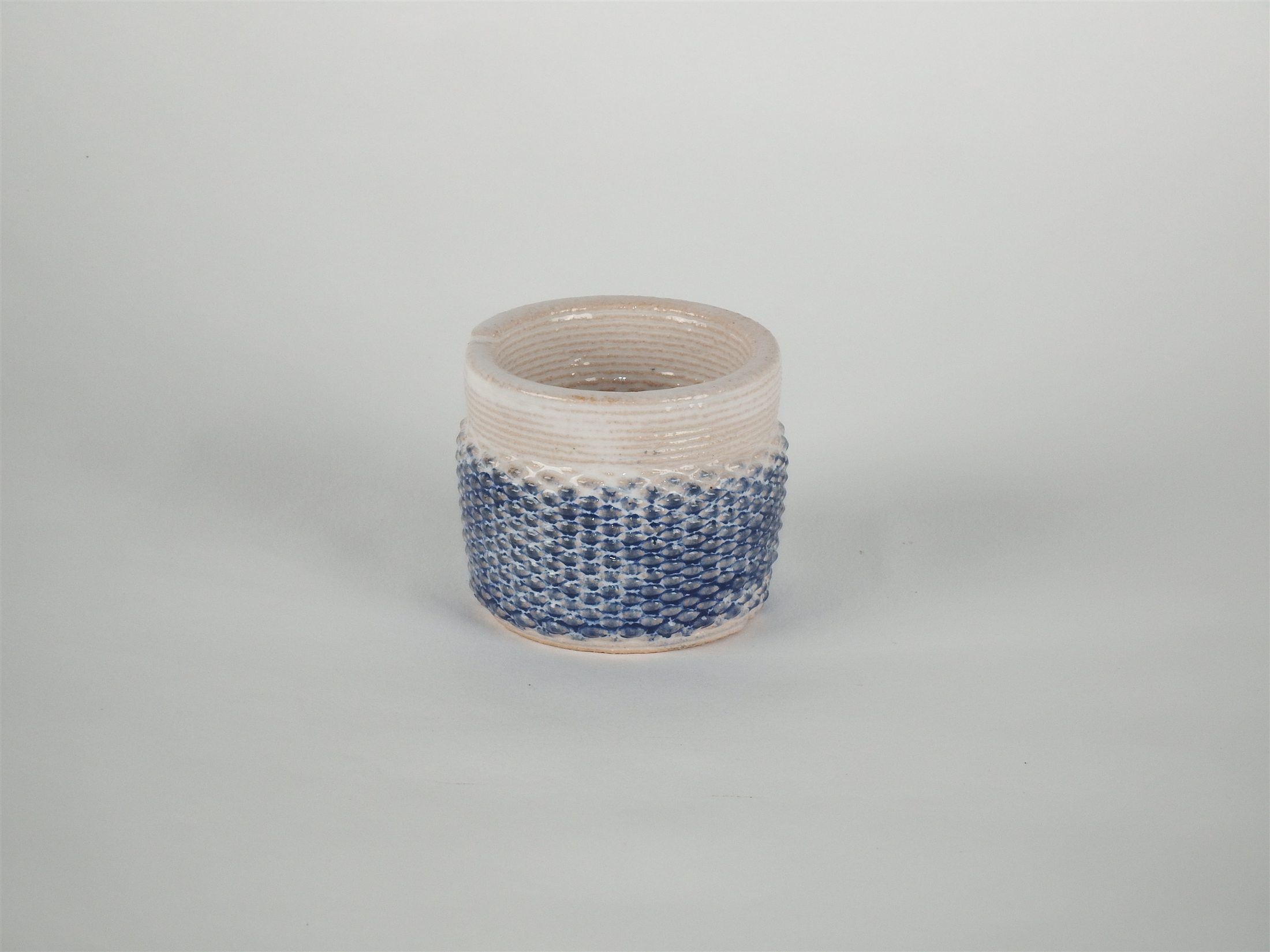
04Espresso Cups
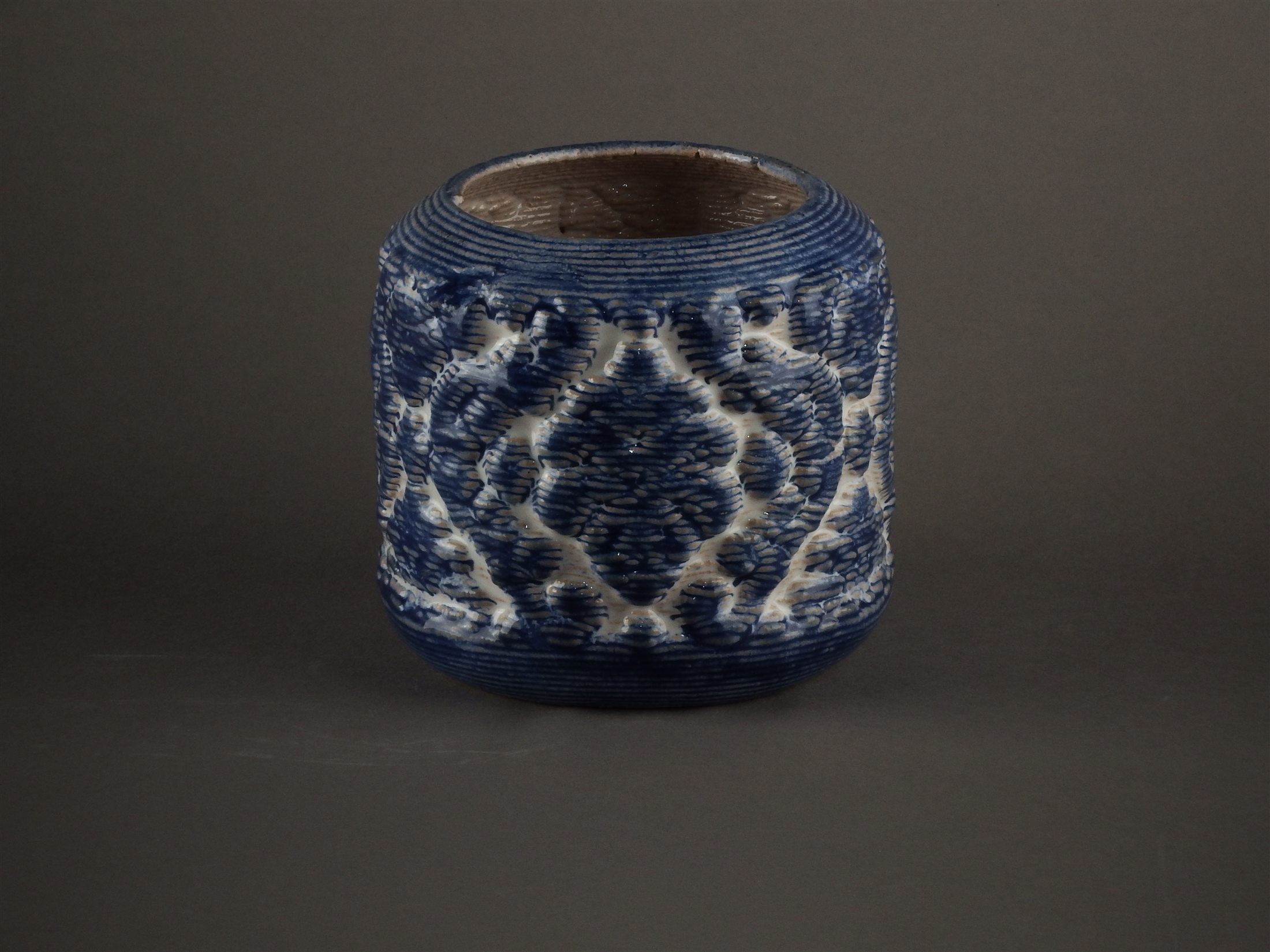
05Plant Pot
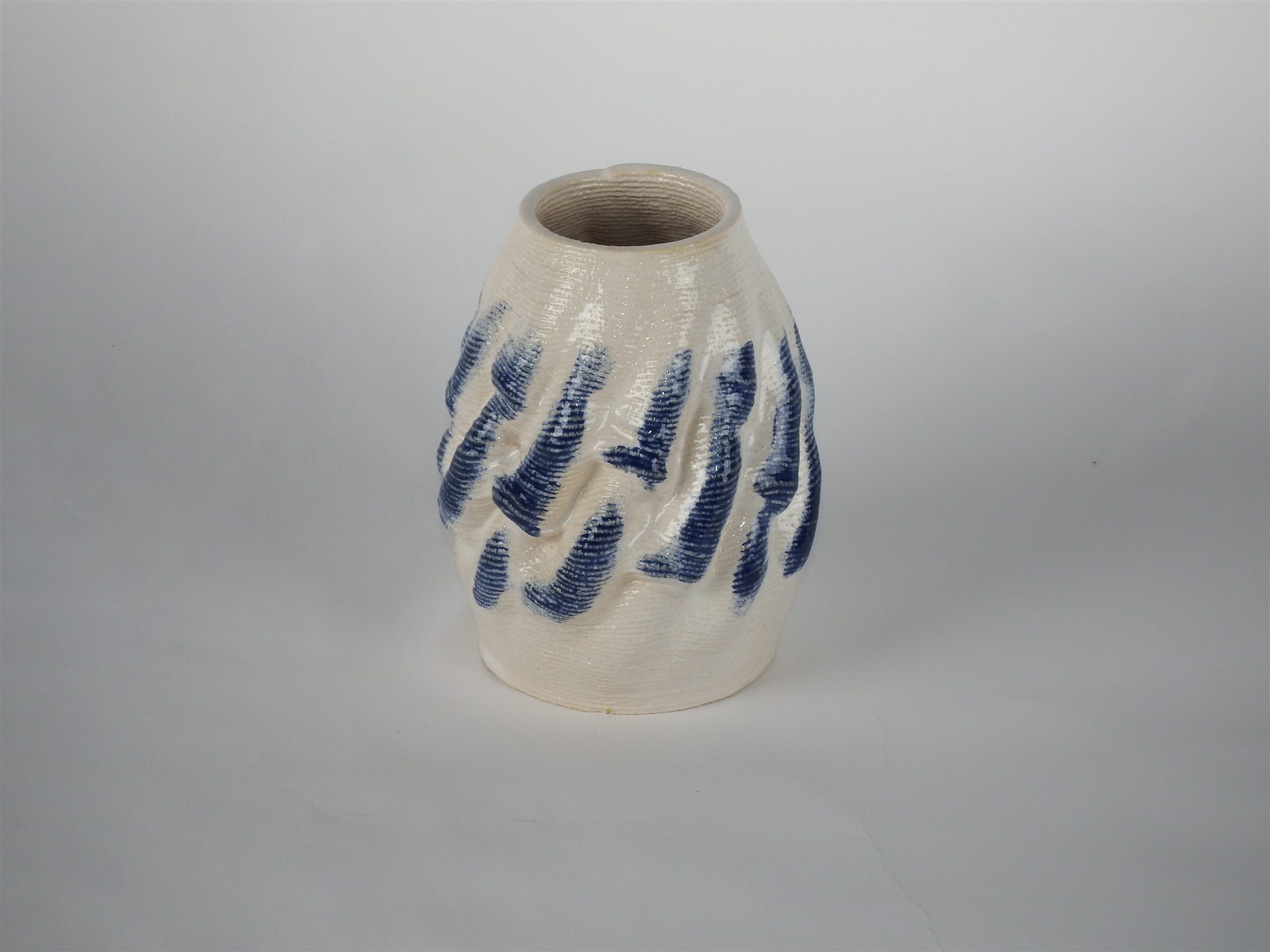
06Wavy Blue
Six ceramic studies testing how 3D-printed surface texture shapes the way a traditional cobalt glaze pools, breaks and settles.
Computational Delft Blue investigates a single question: how does a 3D-printed surface texture change the way glaze behaves? Six studies share the same clay body and the same traditional cobalt glaze. The only variable is the toolpath-generated texture on each one: ribbed, dimpled, faceted, wavy.
The glaze pools in the recesses and thins over the ridges, so the print texture reappears once fired, translated into depth and density of blue. Each object is a self-contained test of one texture; together they form a small material study in tuning digital fabrication for a very old finishing technique.
Type: Independent Study, TU Delft
Year: 2026
Series: 6 Studies
Materials: Glazed Ceramic, 3D Printed